
Looking for a program guide to share easily ? Download a program brochure, here.
Living History Programs
- Louisa May Alcott – the author read selected works and discusses her history in nursing, utopian reform, abolition, and suffrage
- Anne Bonny – harrowing stories of surviving 18th century piracy – and an invitation to join her crew
- Elizabeth Graeme Ferguson – discuss the news of the day, lost love, and poetry with a society lady who had a front row seat tot he American Revolution
- Lydia Beals Jackson Beecher – participate in a meeting of one of the first American women’s rights movements – the WCTU
- Lucy Zollner (composite character) – be assigned an identity of a seance participant in 1919, experience a recreation of a real seance, then discuss the history and psychology behind American occultism
- Elizabeth (Betsy) Gritschom Ross – discuss the Continental Army, flag making, the Quaker Society of Friends, and 18th Century entrepreneurship – and prepare to debunk common American myths
- Harriot Stanton Blatch – experience a lecture tour with Elizabeth Cady Stanton’s daughter and successor, and dissect the motivations of the first wave of the women’s suffrage movement
- Hannah Allgoode Glasse – learn to read historic recipes, evaluate ingredients and foodways, and create a taste of history
Modern Educational Presentations
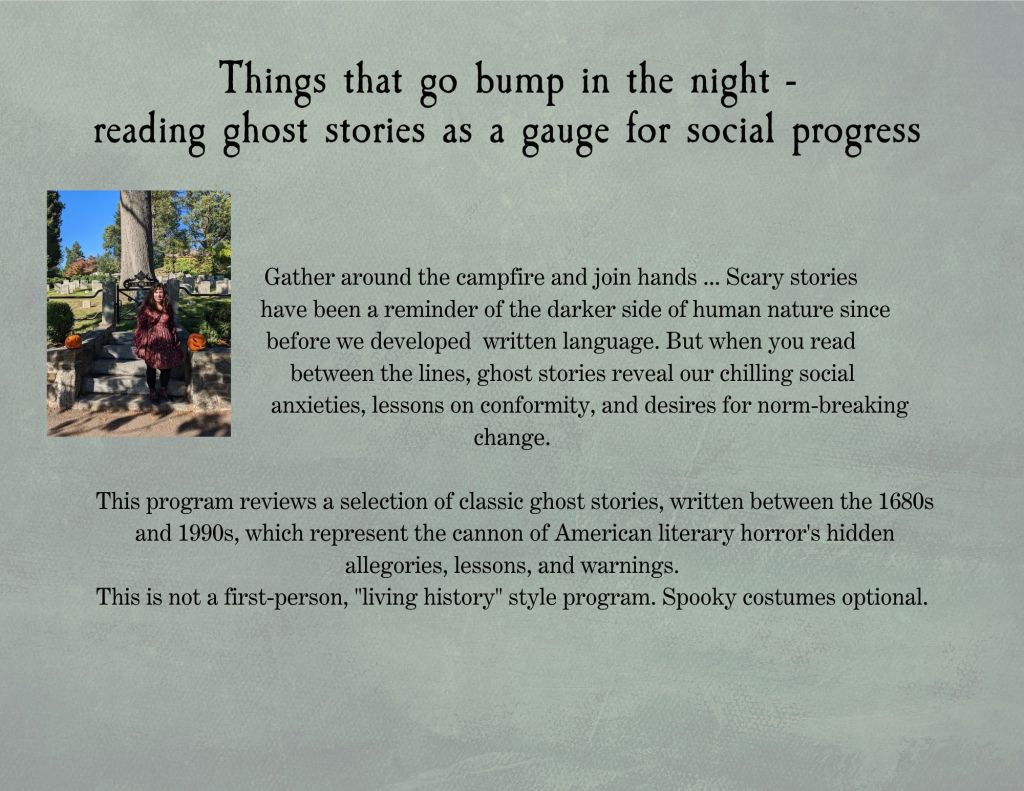
- Things That Go Bump in the Night: reading ghost stories as a gauge for social progress
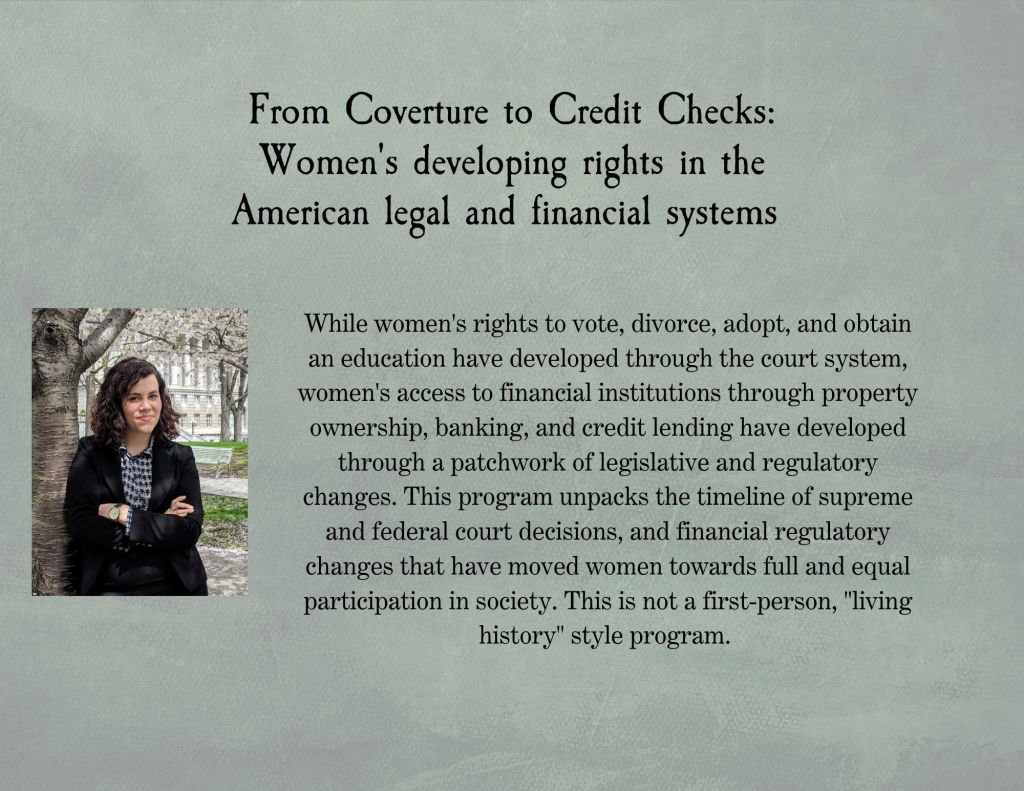
- From Coverture to Credit Checks: women’s developing rights in the American legal and financial systems
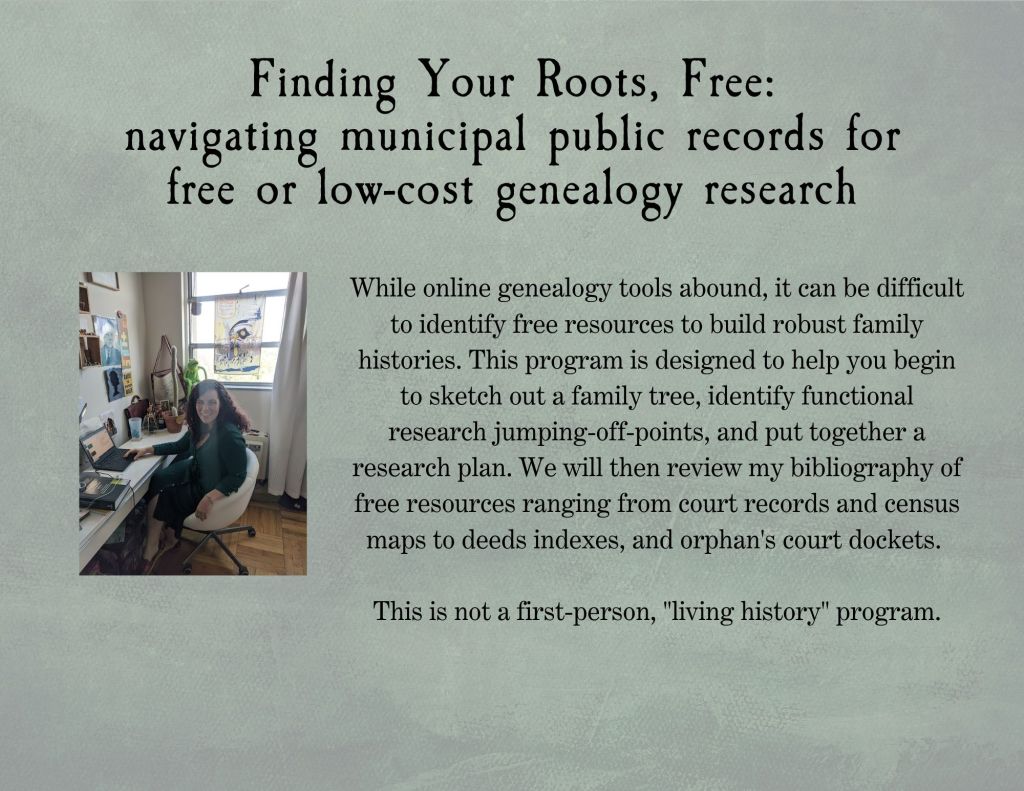
- Finding Your Roots, Free: navigating municipal public records for free or low cost genealogy research
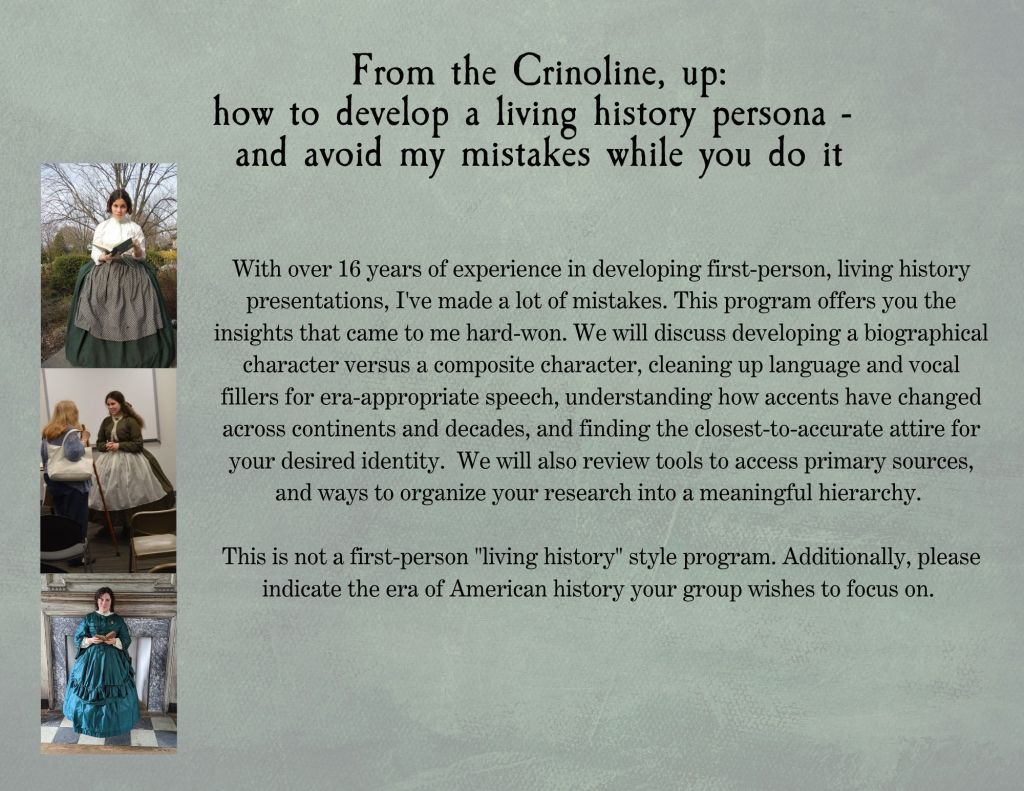
- From the Crinoline, Up: how to develop a living history persona, and avoid my mistake while doing it
- The Debt that Drives Us: a critical race theory-driven review of American debt
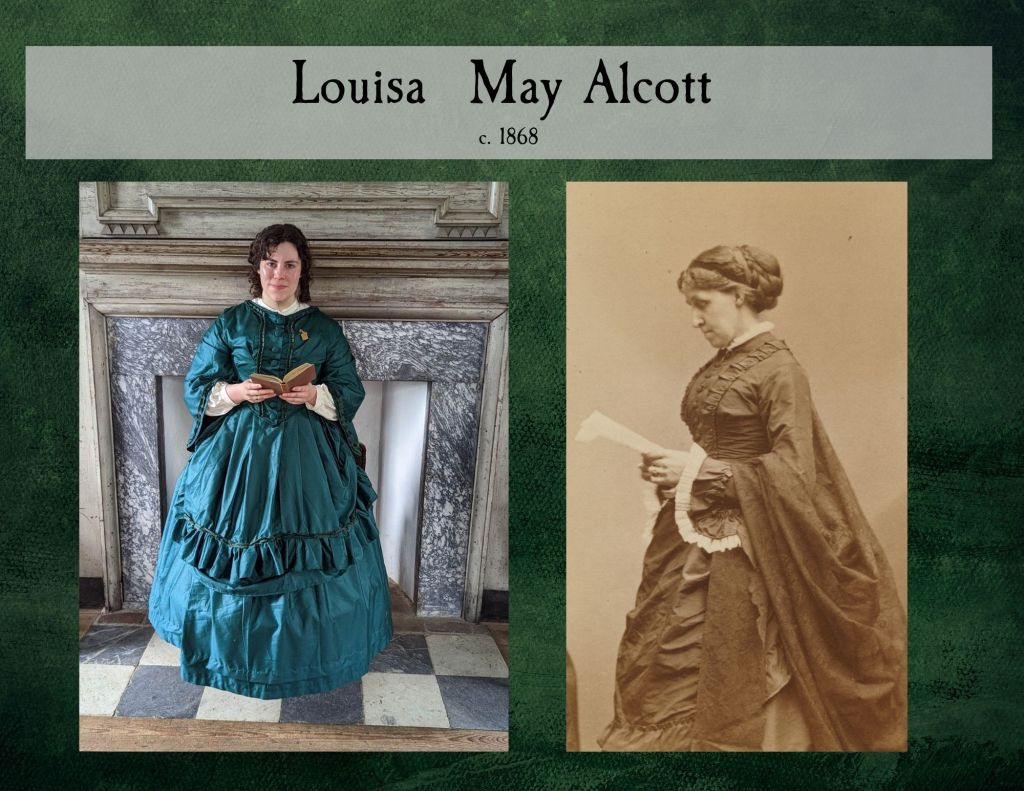
Louisa May Alcott
1868
In 1868, Louisa May Alcott published America’s favorite youth novel, “Little Women”. But before this literary notoriety, she experienced her family’s attempt to pursue utopia on a religious commune, published thrillers under an pseudonym, wrote abolitionist literature for the Atlantic, served as Union nurse in the American Civil War, and organized the women of Massachusetts to pursue suffrage. This first-person program begins with the author introducing herself, and interspersing her life story with readings from selected works from her portfolio, ranging from obscure to cherished. Followed by a participant-driven q&a.
Program themes: American slavery, women’s voting and economic rights, literary history, gender roles
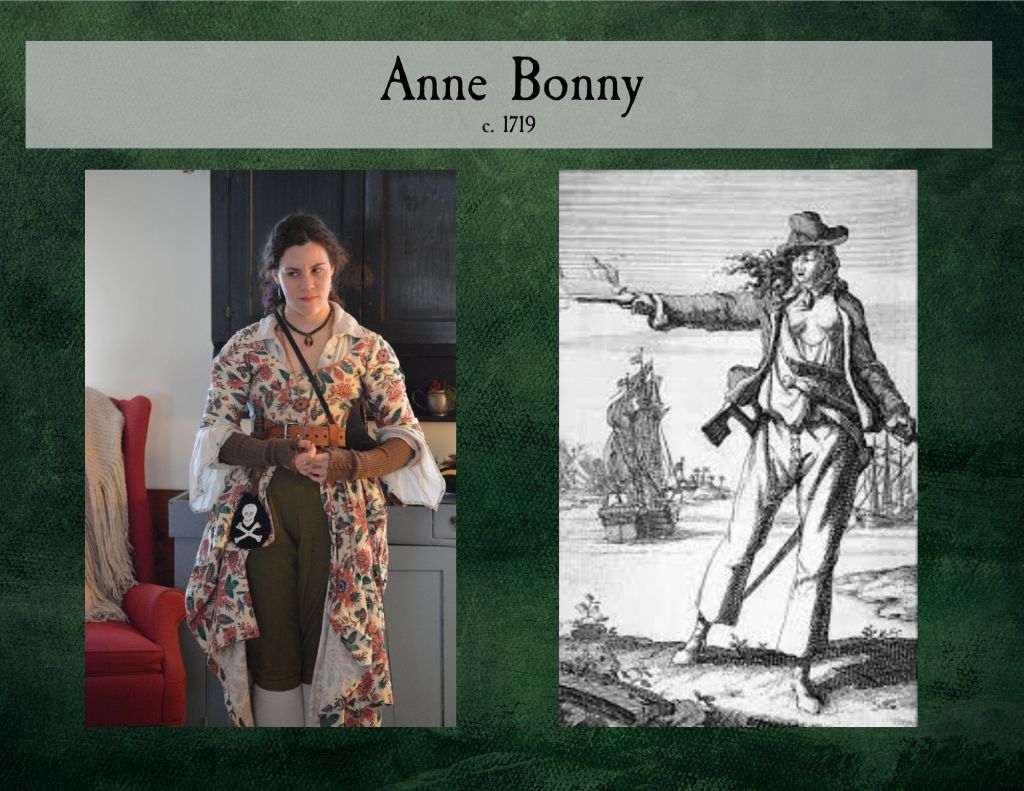
1719
Anne Bonny
Anne Bonny was the famous and infamous Pirate memorialized in Captain Charles Johnson’s “The History of the Pyrates”, and portrayed endlessly in film and media. Join Anne for a discussion of her life history, as she tries to recruit you to her crew – or determine if you are secretly Privateers aligned with one of the many royal Governors with a warrant on her head.
When booking, please provide the age range of your attendees, as this program can be child-friendly (who doesn’t love pirate stories!?) or deal with adult themes.
Program themes: maritime and privateering law, prison history, life on a pirate ship, gender and sexual identity in historic context.
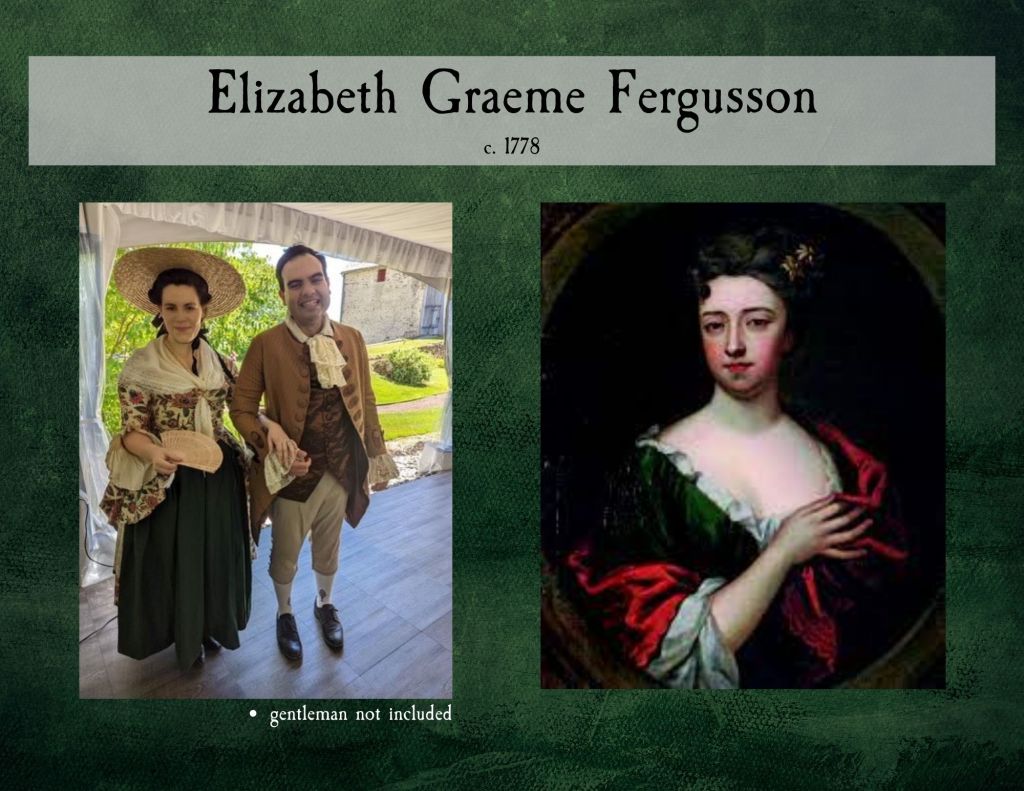
1778
Elizabeth Graeme Fergusson
Once called the most educated woman in Pennsylvania, Elizabeth Graeme Ferguson had a front seat to the struggle of American enlightenment and the Revolutionary War. Elizabeth’s secret engagement to William Franklin flew in face of her family’s Penn-aligned politics. When the engagement ended, Elizabeth threw herself into hosting intellectual salons which glittered with her luminary friends, including Dr. Benjamin Rush, Francis Hopkinson, Anthony Wayne, and and Rev. William Smith. At such a salon, she met her husband, the Loyalist poet, Henry Hugh Ferguson. Their marriage resulted in her property being seized and sold by the Continental Congress.
This program invites you to participate in an eighteenth century political salon, with Elizabeth as your host. Elizabeth presents a narrative of her life and review of the current progress of the war for American independence. Then, equipped with a selection of literary and news primary source documents, you are invited into a probing discussion on how the citizens of a new nation seek to restructure their society.
Program themes: the American Revolution, martial, law and military seizure, women’s property ownership rights, social class in the eighteenth century, Pennsylvania history and the Penn Proprietorship.
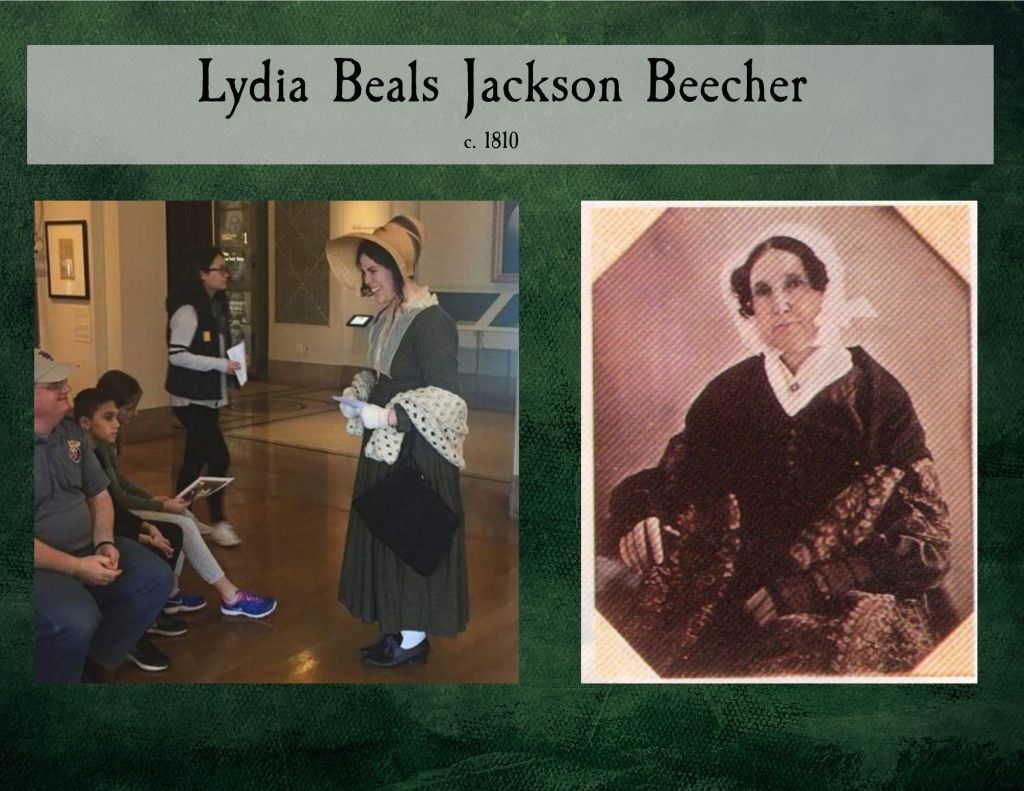
1810
Lydia Beals Jackson Beecher
The third wife of Lyman Beecher, and step mother to Harriet Beecher Stowe and Henry Ward Beecher, Lydia Beecher worked at the timid forefront of the Women’s Temperance Movement. Before women stepped out of their socially assigned roles to fight for the vote, temperance activists advocated for an improved home life through husbands and fathers abstaining from alcohol. While forging a path for women’s public activism, Beecher and other temperance activists also grappled with the relationship between women’s rights and the rights of Black Americans held in slavery and living as freedmen.
This program is structured as a meeting of the Women’s Christian Temperance Union, where Lydia Beecher will summarize the minutes of your prior meeting, deliver a new semi-biographical speech she is honing for public address, and introduce a letter requesting support from the newly forming American Colonization Society, for consideration and a vote.
Program themes: racism in early women’s movements, gender roles, domestic politics
1919
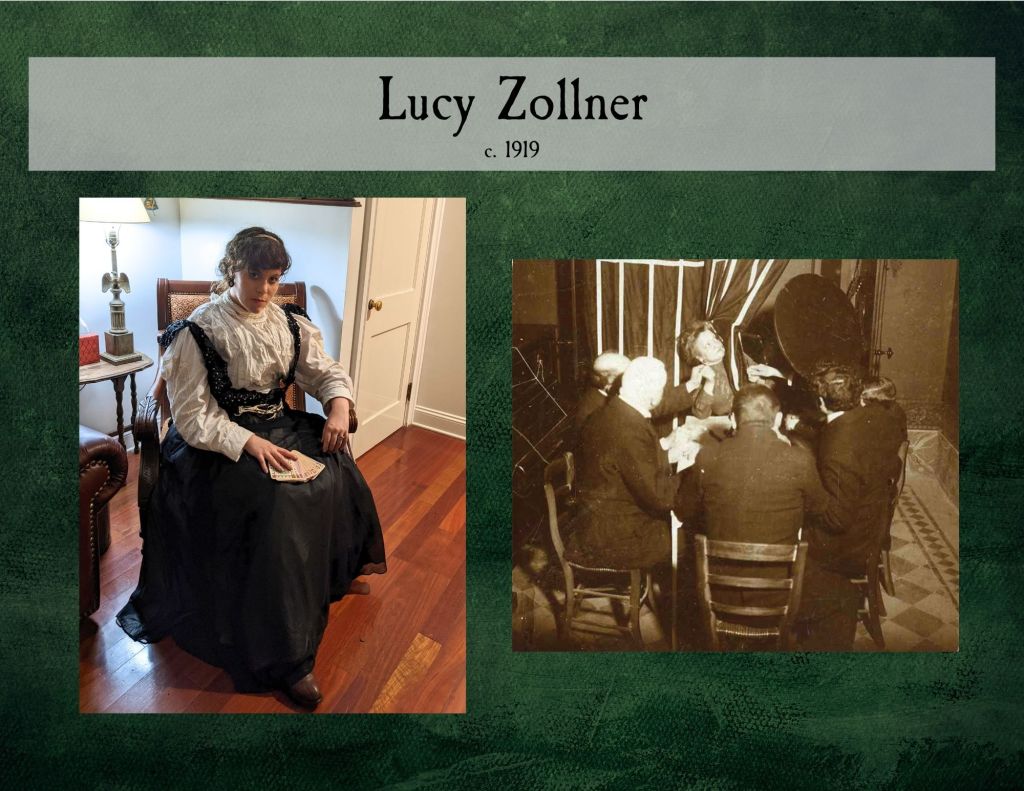
Lucy Zollner
Lucy Zollner is a “composite character” crafted to represent the many women who drove forward the Spiritualism and Theosophy movements in the nineteenth and twentieth centuries. This character draws from the life histories and performance elements of spiritualist mediums, including the Fox sisters, Eusapia Palladino, Florence Cook, and Jean Leckie Doyle, as well as the illusions documented by Harry Houdini.
This program is fully immersive. Each guest is assigned an identity of a real person who lived through the 1918-1919 Influenza epidemic, with a brief biography and your motivation for seeking out a seance. (I can provide identity cards in advance, or they can be distributed as program guests arrive.) The program is a 45 min theatrical seance, at which “spirits” will appear following historically-inspired illusions. Following the program, we will walk though a reveal and explanation of each illusion and have a q&a.
Program themes: World War One, the influenza epidemic, group psychology, history of the occult, Spiritualism, history myth-busting.
1776
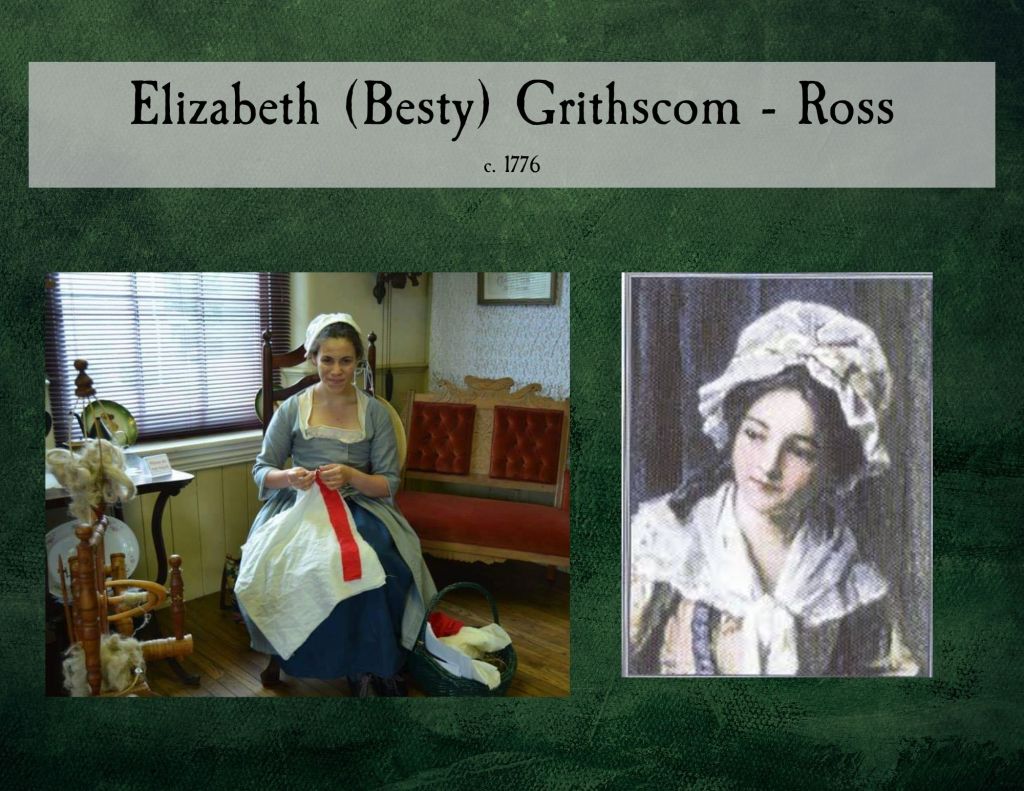
Elizabeth (Besty) Gristhscom Ross
Betsy Ross was a trailblazing woman in Philadelphia’s revolutionary history – but for none of the reasons you think you know!
Elizabeth Gristhscom’s family were members of the Quaker Society of Friends, but broke religious tradition in two ways. First, her father was a member of the elite Carpenter’s Company of Philadelphia and second, she was apprenticed to an upholsterer to learn the trade of furniture and flag finishing. Betsy broke tradition again by leaving the Society of Friends to marry her fellow apprentice, John Ross – then inheriting their upholstery business as his widow. It was there that she created several orders of U.S. Naval flags during the American Revolution. Her family capitalized on this at the time of the American centennial, growing her false legacy into the story of the first American flag that many still learn today.
This program is a traditional first person, biographical lecture followed by a question and answer discussion.
Program themes: history myth busting, women’s property rights in 18th century America, Philadelphia society, the American Revolution, Labor Union history.
1907
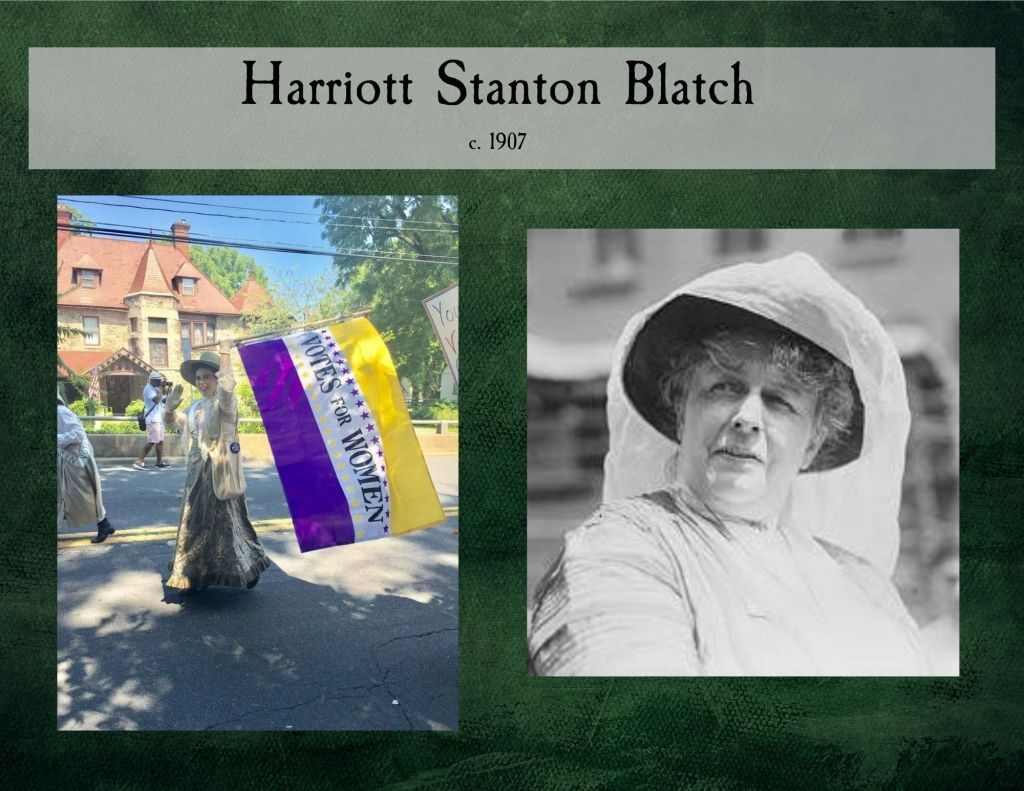
Harriott Stanton Blatch
Harriet Stanton blatch stood on the shoulders of her suffragist movement leader mother, Elizabeth Cady Stanton. Working through interviews of her mother and other suffragists of her era, Blatch published her narrative history of the women’s rights movement, which reached broad circulation and contributed to the ultimate success of the 19th amendment. Although she intentionally excluded diverse narratives from her published history, Blatch reinvigorated the suffrage movement, primarily by involving women working outside the home during World War 1, trade unions, and African American women who had been excluded from central leadership and narratives of the first wave of the women’s suffrage movement.
This program is structured as a meeting of a local women’s suffrage society, where you have invited Blatch to speak, she will read from excerpts of various advocacy and historical publications, and then invite program participants to engage in a discussion of their on-the-ground work in favor of the women’s rights to vote.
Program themes: women’s history, this suffrage movement, racism in American social movements, World War I and female labor.
1740
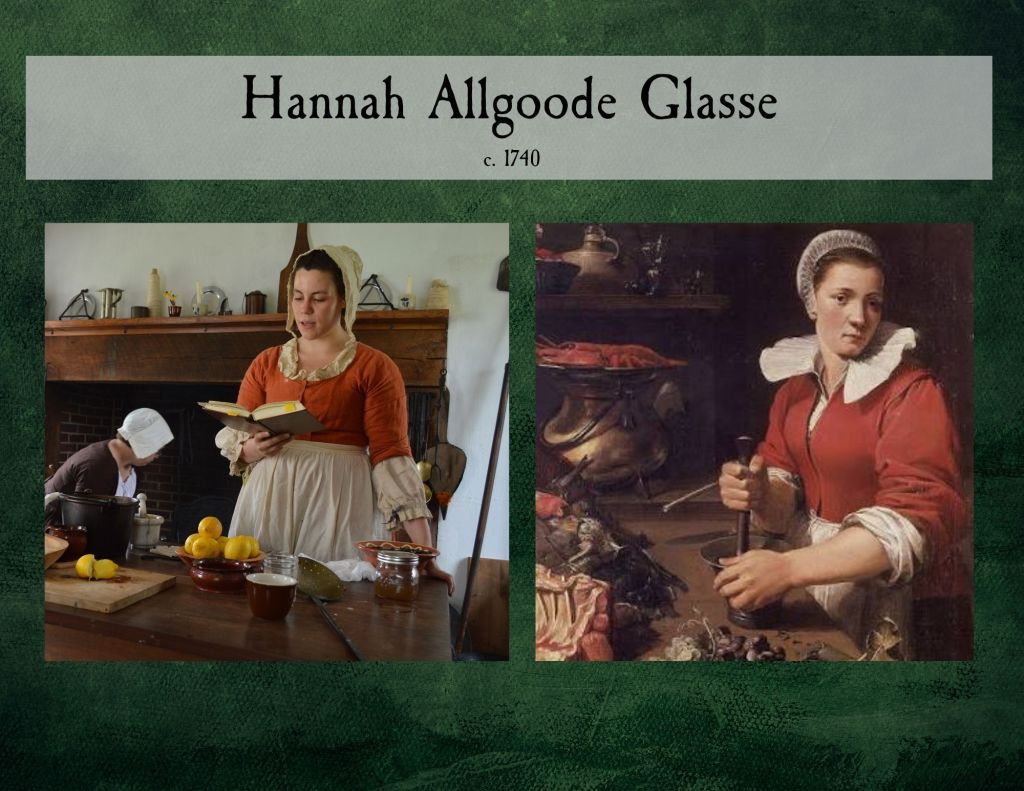
Hannah Allgoode Glasse
Hannah Glasse began her life in relative comfort, the daughter of a coal trader and a family of vintners, living in London. After eloping, Hannah and her new husband experienced financial hardship, living away from family support, in Essex England. This prompted her to write one of the most widely sold recipe books of all time – “the Art of Cookery Made Plaine and Simple”.
This program can be a biographical first person lecture, followed by a q&a, or a functional cooking class, where we work through 2 recipes from the Art of Cookery, tackling the intricacies of reading historical text and interpreting ingredients and instructions, with first-person commentary. The cooking program works beautifully in a museum kitchen, but is just as much fun in your modern kitchen setting!
Program themes: history myth busting, kitchen safety in historical context, interpreting original texts, hands on history.
sociology
ghost stories as a gauge for social progress
legal history
Women’s Rights in Legal and financial History
research skills
Free Resources for Beginner Genealogy
research skills
Developing a Living History Program
legal history
Critical History of American Debt

interactive, mindfulness

